


 Indonesia


The Sale that Starts Long Before the Shopping Cart
Late in the afternoon, a small business owner in Indonesia has a familiar concern. Is the product good enough? Is the price right? Is there a factory in Guangzhou that can undercut them by twenty percent? The usual questions that keep Indonesian exporters awake, and they are, according to the 21st China International Small and Medium Enterprises Fair (CISMEF) orientation workshop, not quite the case these days.
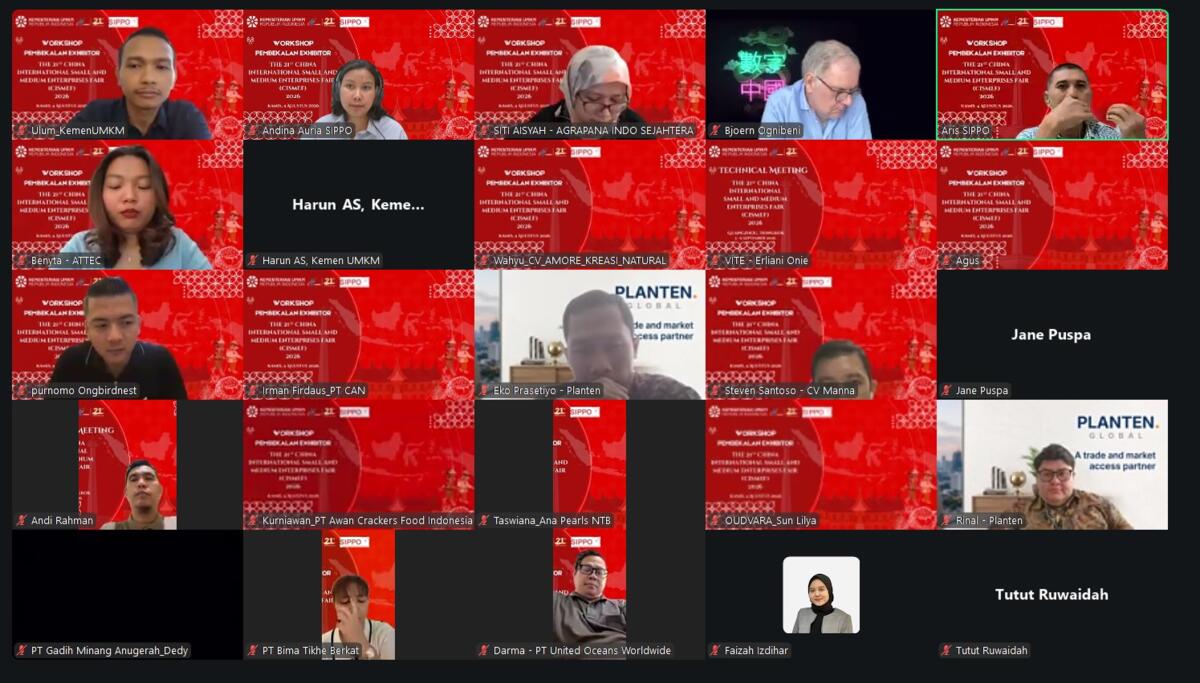
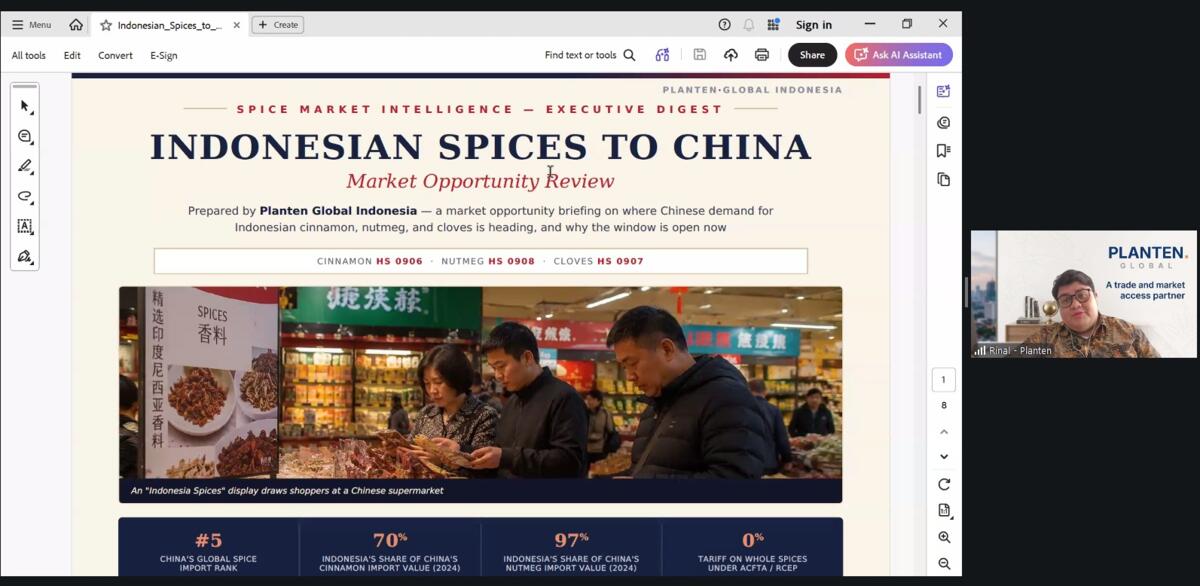
Hosted by the Swiss Import Promotion Programme (SIPPO) in collaboration with Indonesia's Ministry of Micro, Small and Medium Enterprises, the sessions on Market Intelligence by Planten Global and China Social Commerce by Björn Ognibeni drew nearly 100 participants from SMEs online as part of a broader series of preparatory activities leading up to the 21st China International Small and Medium Enterprises Fair (CISMEF) in September 2026. Complemented by targeted guidance on trade fair promotion strategies and pitch deck presentations led by SIPPO Indonesia, the sessions equip participating businesses with practical insights and tools needed to navigate the Chinese market and seize new export opportunities.
The first task is never to sell
Björn Ognibeni, a strategic advisor for practical visionaries and a thought leader on digital transformation, opened his presentation with a simple statement, “Do not think of the Chinese marketplace as a shopping platform. It is an ecosystem that runs on trust and attention.” People now call it ‘shoppertainment’, or shopping through entertainment in the digital marketplace. Björn explained that China’s digital marketplace functions as a connected ecosystem where entertainment, social interaction, discovery, trust-building, and transactions happen simultaneously. In a fast-scrolling digital environment, conventional spec sheet-style listings may not capture buyers’ attention.
This is the trap most SMEs walk into without noticing. They meticulously prepare a catalogue, pricing, certifications, and then wait to be found. Discovery in China is not passive. It has to be earned through content such as videos, interactive livestreams, or even a short drama video. Turn passive product browsing into active engagement to build buyers’ trust. Most exporters assume trust is built after the first order lands, through good service and repeat business. In China, it often happens the other way around. Trust has to exist before a single transaction happens.
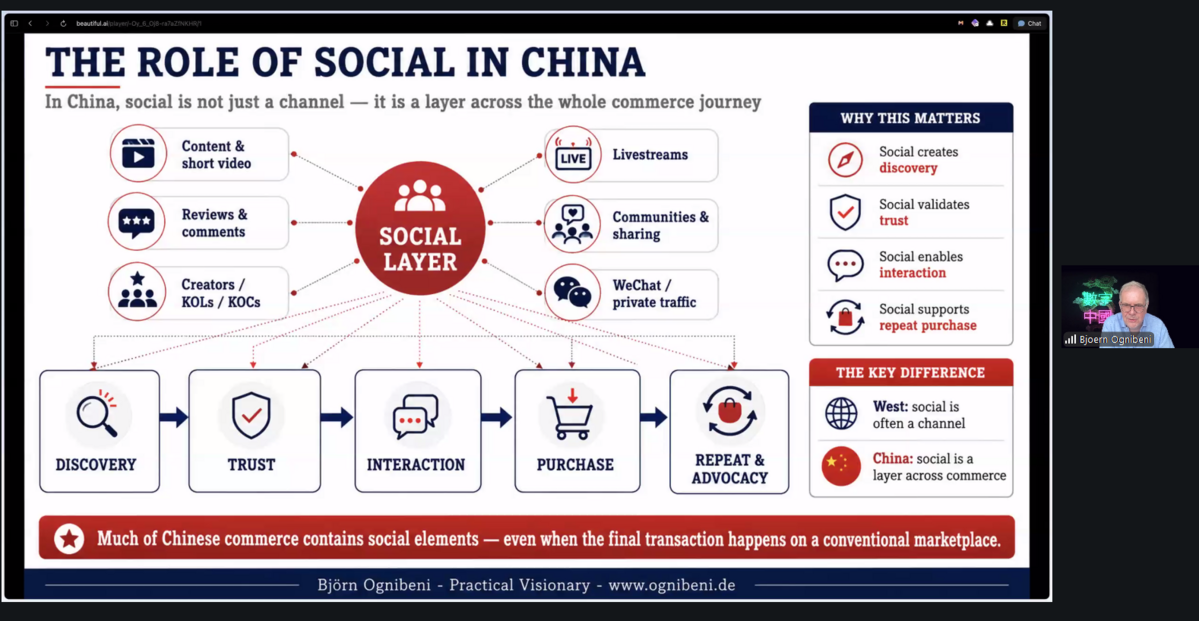
The workshop laid out the path plainly:
- Research where the trust gap sits.
- Build a minimum presence across the digital channels buyers actually use, such as WeChat.
- Make products easy to verify and trace.
- Bring in third-party validation, such as experts or reviews.
- And only then, connect that trust to action.
Trust starts the moment a buyer can understand, verify, and act on what they see. B2B buyers move through nearly the same journey. They discover suppliers on Alibaba.com, JD Industrial, or other industry platforms, then build confidence through WeChat, catalogues, reviews, trade fairs, or direct contact, and only then commit to a purchase order. B2B e-commerce combines sourcing, relationships, digital communication, and transactions in one ecosystem. This means being technically capable is no longer sufficient. Businesses must also be digitally visible and socially credible.
A cultural mechanism works underneath it all. China operates as what researchers call a low-context society, where relationships and story can carry more weight than the products alone. Selling the story, not just the product, is the mechanism by which trust gets built at scale. Which is why the workshop's closing point lands as a genuine reframe. Success in the Chinese market is measured beyond conversion and sales. Active users and time spent in the digital marketplace have become the metrics that matter, because they measure what sales figures cannot: whether people are actually engaging and eventually coming back.
The Critical Five Minutes to Win a Buyer’s Attention
Indonesia’s business owners still need a competitive price and a solid product. But neither will matter if nobody is engaged enough to talk about it. The direction for SMEs attending CISMEF 2026 is to maximize relationships through content that creates interest and trust, driving decisions and bringing buyers back.
Out of fifty participating enterprises, ten are selected for the B2B matchmaking sessions, where seven companies will submit their business pitch decks, and three will take the stage to conduct direct presentations. As preparations accelerate, SIPPO and Indonesia's Ministry of Micro, Small and Medium Enterprises challenge participating SMEs to rethink how they present themselves in under five minutes to one of the world's most dynamic markets. Guided by SIPPO Indonesia, several elements are key in preparing a convincing deck. A strong pitch starts by understanding the buyer's pain points and sustainability challenges, then demonstrating how the company's unique strengths can provide a solution. Powerful headlines, concise messages, compelling visuals, and a clear invitation to continue the conversation can make the difference and help SMEs to engage with buyers.
The workshop is also a reminder that products alone rarely close deals. Stories do. Human-centered content, local applications, and evidence-backed claims help build relevance and credibility in a market where trust must be earned quickly. As shared by Purnomo from CV Citra Walet following his experience in Wuhan during the 14th China Food Trade Fair last March 2026, “Success also depends on a combination of consistency, reliable delivery, sufficient volume, hygiene standards, and competitive pricing, all reinforced by quality assurance supported through certifications (General Administration of Customs China/GACC) or laboratory results”. Logging out of both online workshops, SME participants brought with them the importance of how opportunities emerge when stories resonate as a base for relationships to form.
Linked article: The Sale that Starts Long Before the Shopping Cart - News - Site
---
Swiss Import Promotion Programme (SIPPO) is mandated by the Swiss State Secretariat for Economic Affairs (SECO), and is implemented by Swisscontact Indonesia.
